
Protected
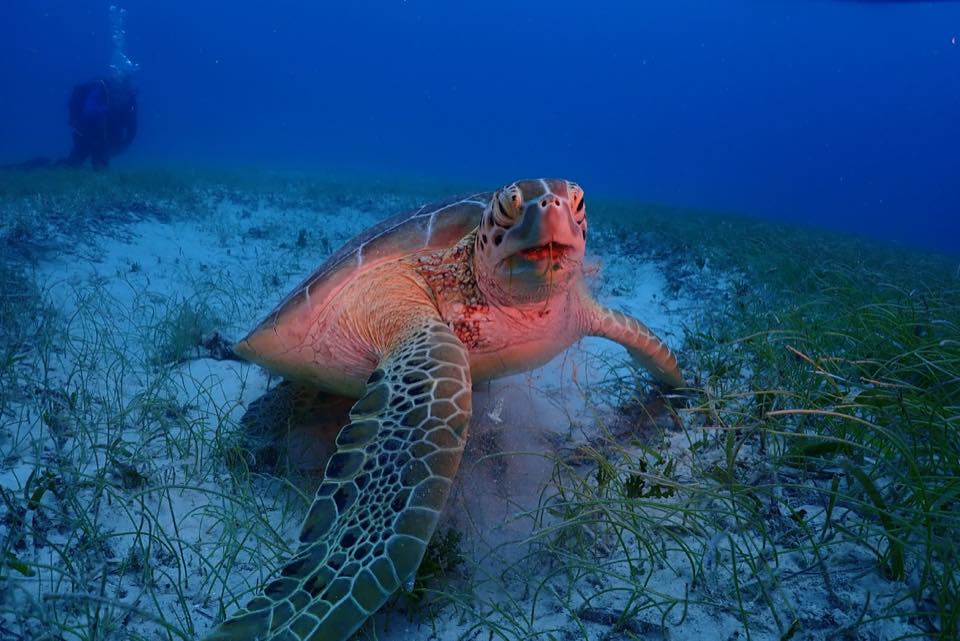
Green sea turtle
Tortuga verde · Chelonia mydas
Grazes on seagrass and algae, and often lets divers watch from a respectful distance.
Marine life · Puerto Rico
Animals we’ve met on our dives, with their English, Spanish and scientific names. What you meet depends on the day. Photos from PR Dive trips and courses.
Want photos like these? See our underwater photo settings.
Look, don’t touch. Keep your distance, keep your fins off the reef, and never feed or chase anything.
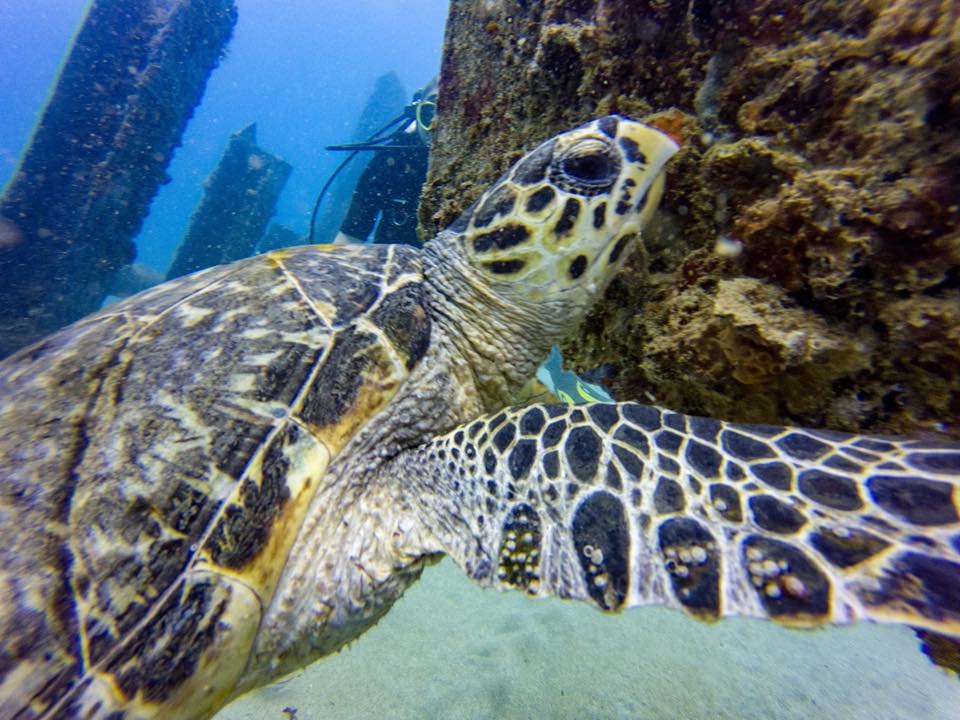
Protected
Tortuga verde · Chelonia mydas
Grazes on seagrass and algae, and often lets divers watch from a respectful distance.
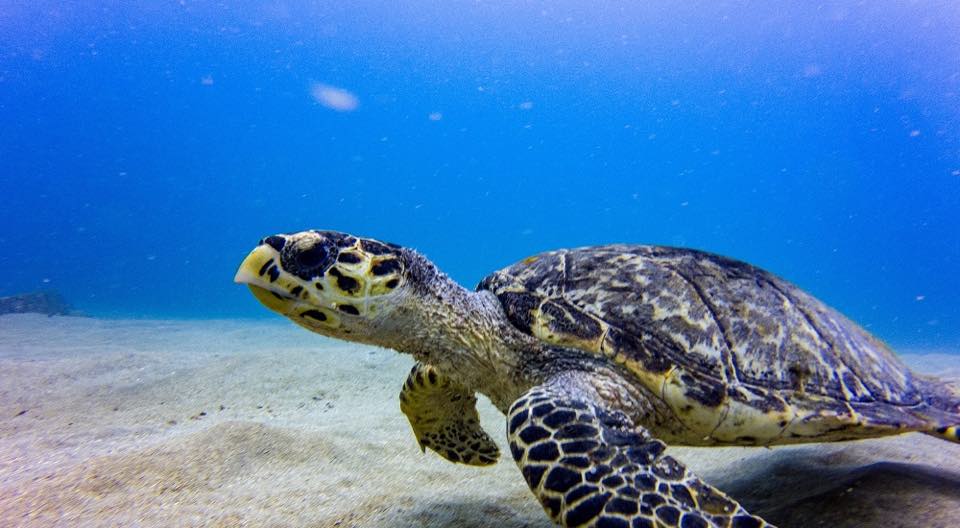
Protected
Tortuga carey · Eretmochelys imbricata
Look for the narrow, pointed beak and overlapping shell plates. It feeds on sponges on the reef.
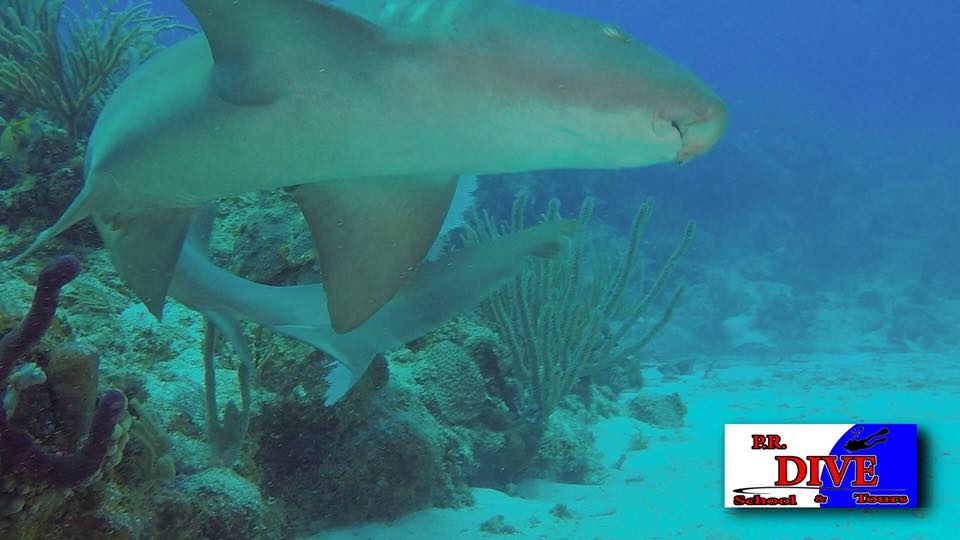
Tiburón gata · Ginglymostoma cirratum
Rests under ledges during the day and hunts at night. Calm, but it can bite if grabbed or cornered.
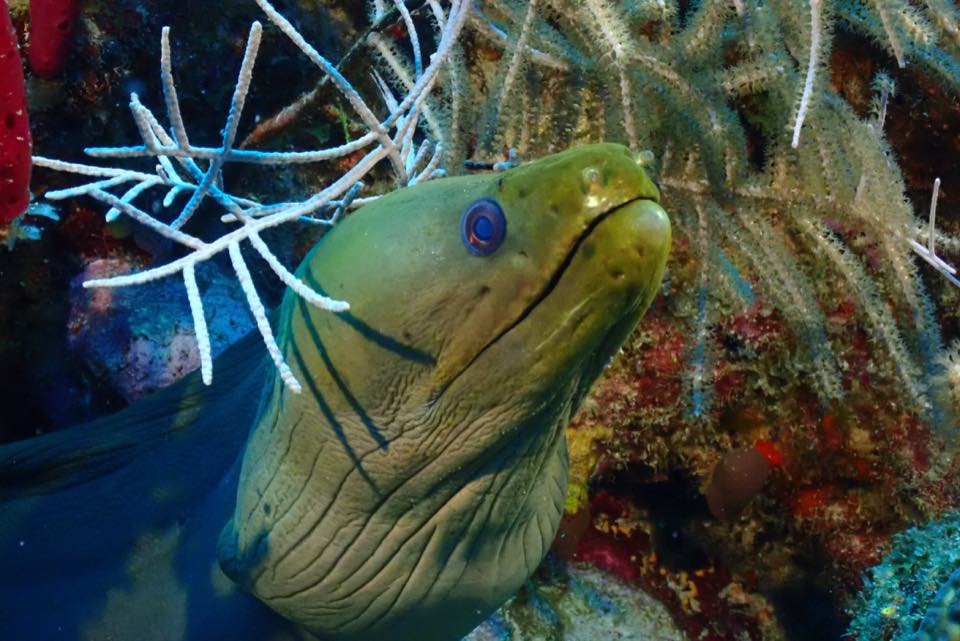
Morena verde · Gymnothorax funebris
Opens and closes its mouth to breathe, not to threaten you. Keep your hands out of holes in the reef.
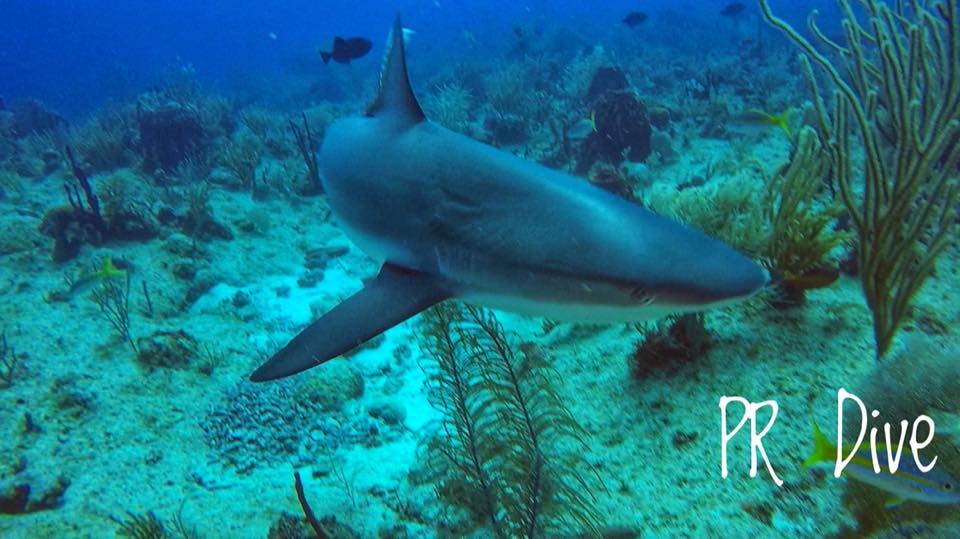
Tiburón de arrecife del Caribe · Carcharhinus perezi
A calm, curious shark of the outer reefs. Give it space, stay still and enjoy it.
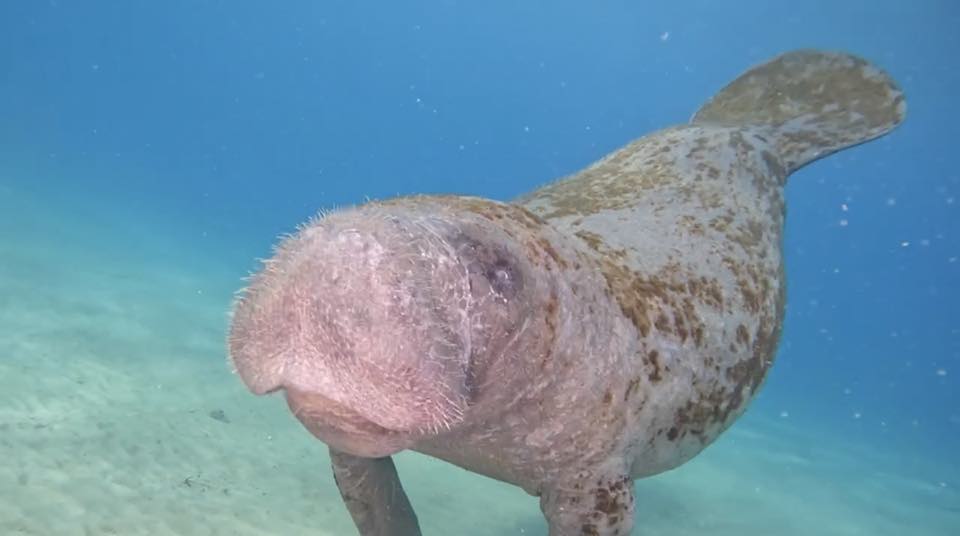
Protected
Manatí antillano · Trichechus manatus manatus
A gentle giant that grazes on seagrass. Never touch, chase or feed one, and give it room to surface.
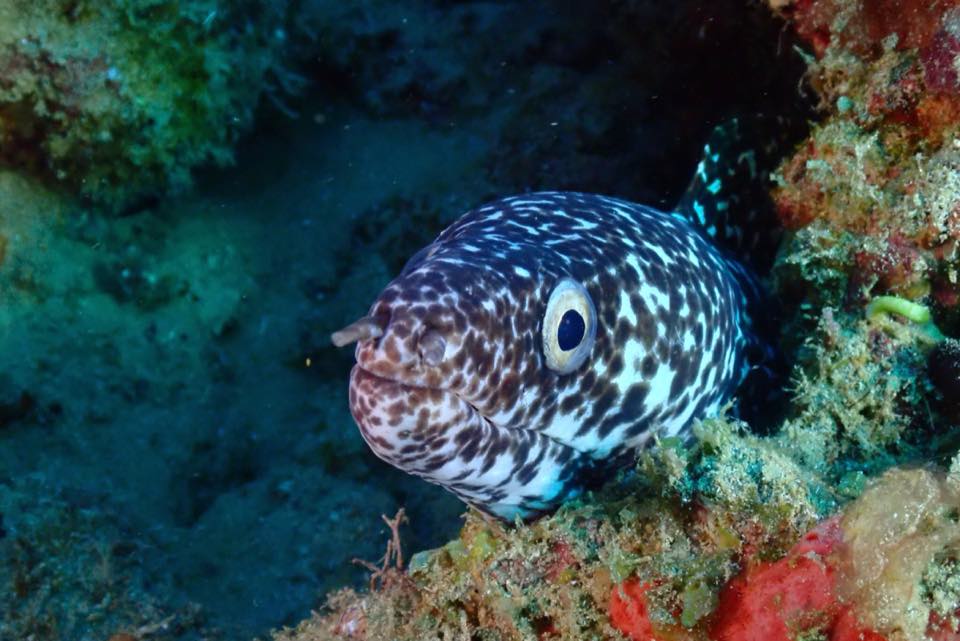
Morena pintada · Gymnothorax moringa
Speckled black on white. It hides in holes by day and hunts in the open at night.
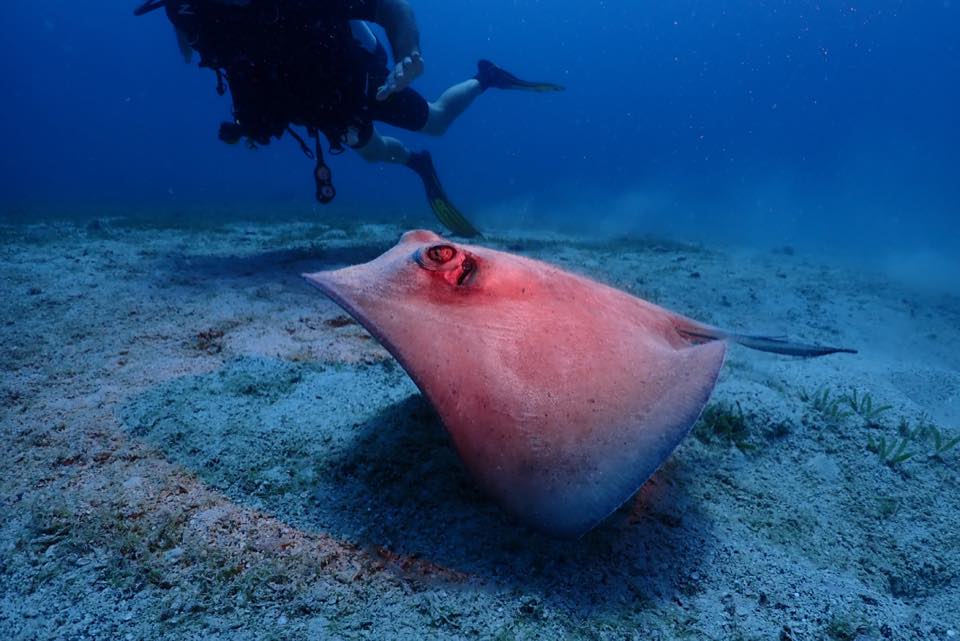
Raya del sur · Hypanus americanus
Rests buried in the sand with only its eyes showing. Watch where you put your hands and fins, and never step on or grab one.
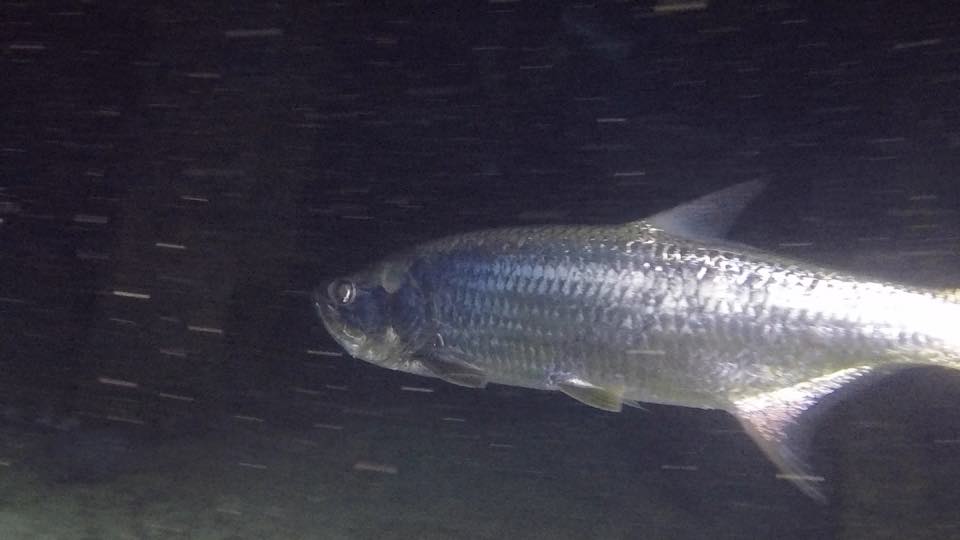
Sábalo · Megalops atlanticus
Big, silver and prehistoric-looking. It often hangs around piers and structures, especially at night.
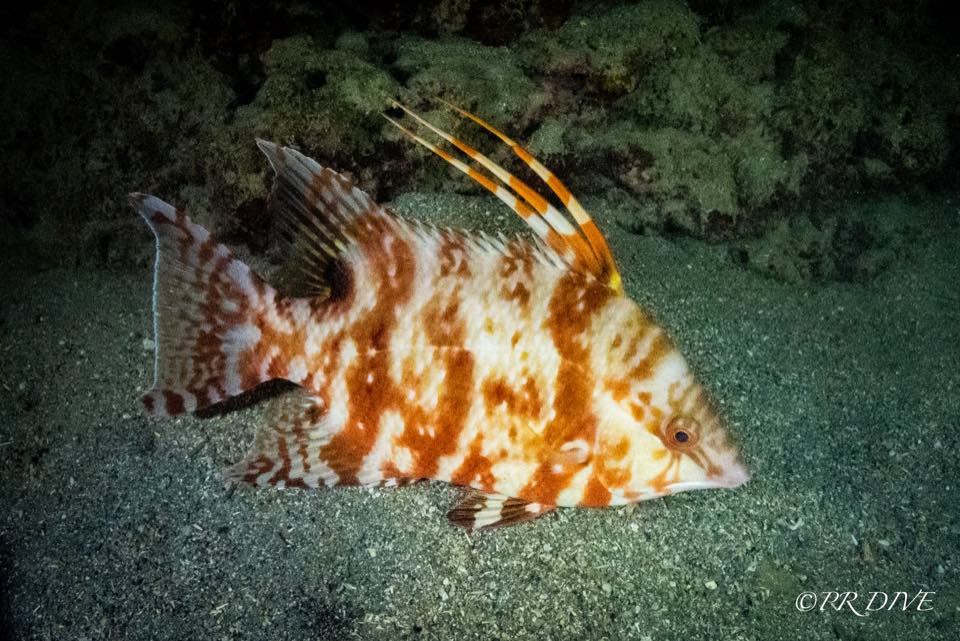
Capitán · Lachnolaimus maximus
Named for its long snout, which it uses to root in the sand for shellfish. The first dorsal spines are long and trailing.
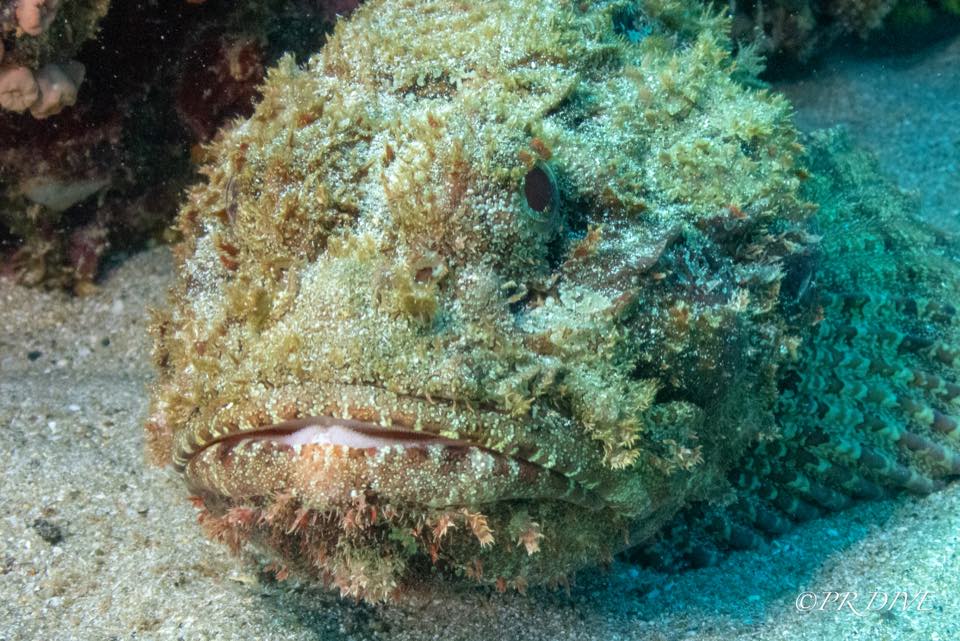
Rascacio · Scorpaena plumieri
A master of camouflage with venomous spines. The best reason to watch where you put your hands.
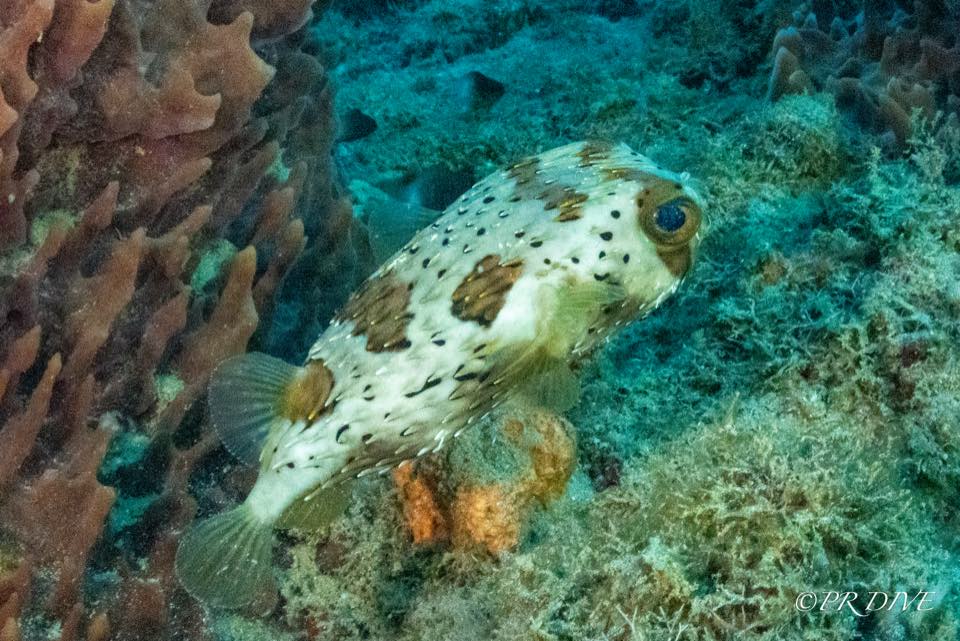
Pez erizo · Diodon hystrix
Big eyes for hunting at night. It puffs up when threatened, which is stressful for it, so never provoke it.
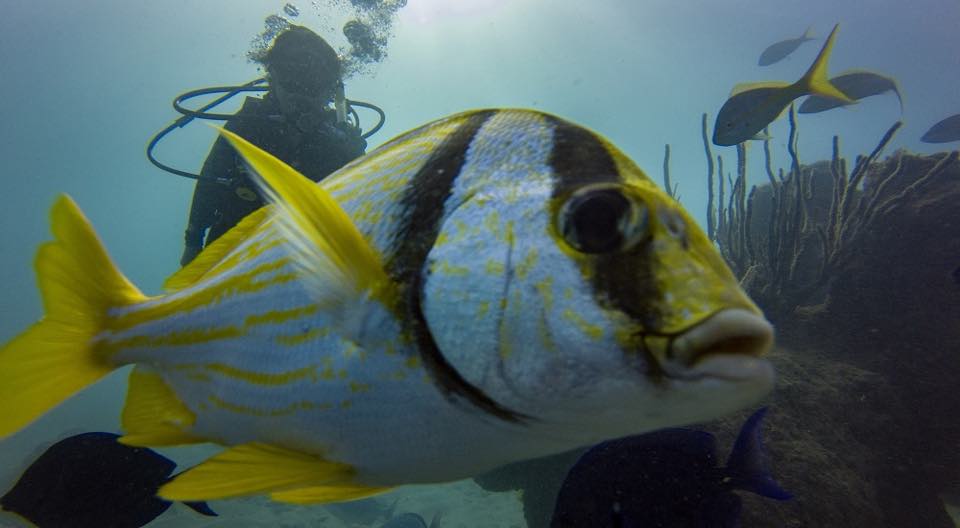
Catalineta · Anisotremus virginicus
Yellow stripes and two black bars across the head. Often hangs out in small groups near ledges.
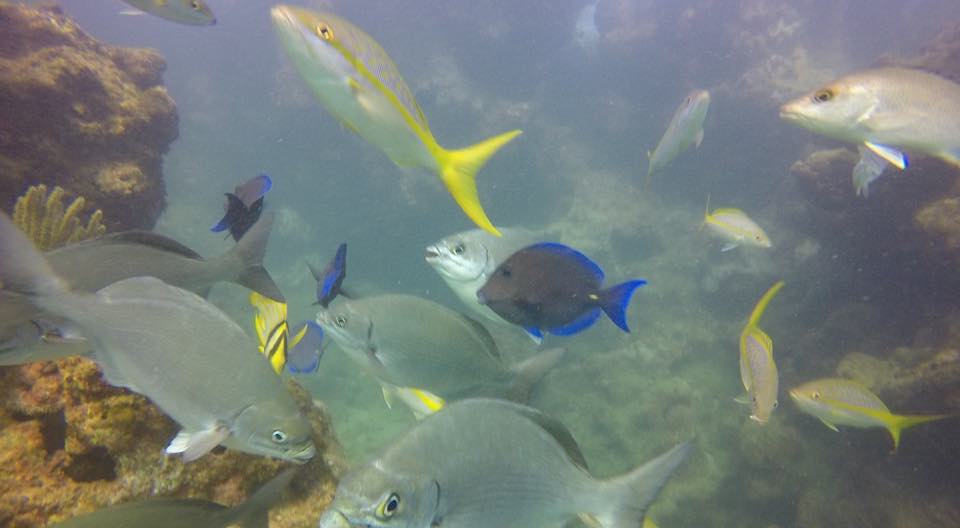
Colirrubia · Ocyurus chrysurus
A bright yellow stripe runs to its forked tail. Curious, and often follows divers around the reef.
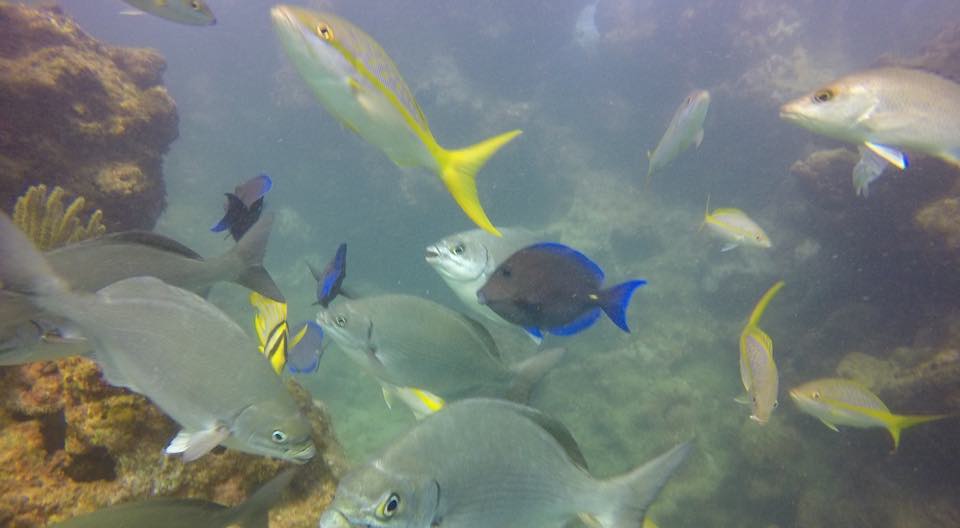
Barbero azul · Acanthurus coeruleus
Young ones are bright yellow; adults turn blue. They graze algae in schools, which helps keep the reef healthy.
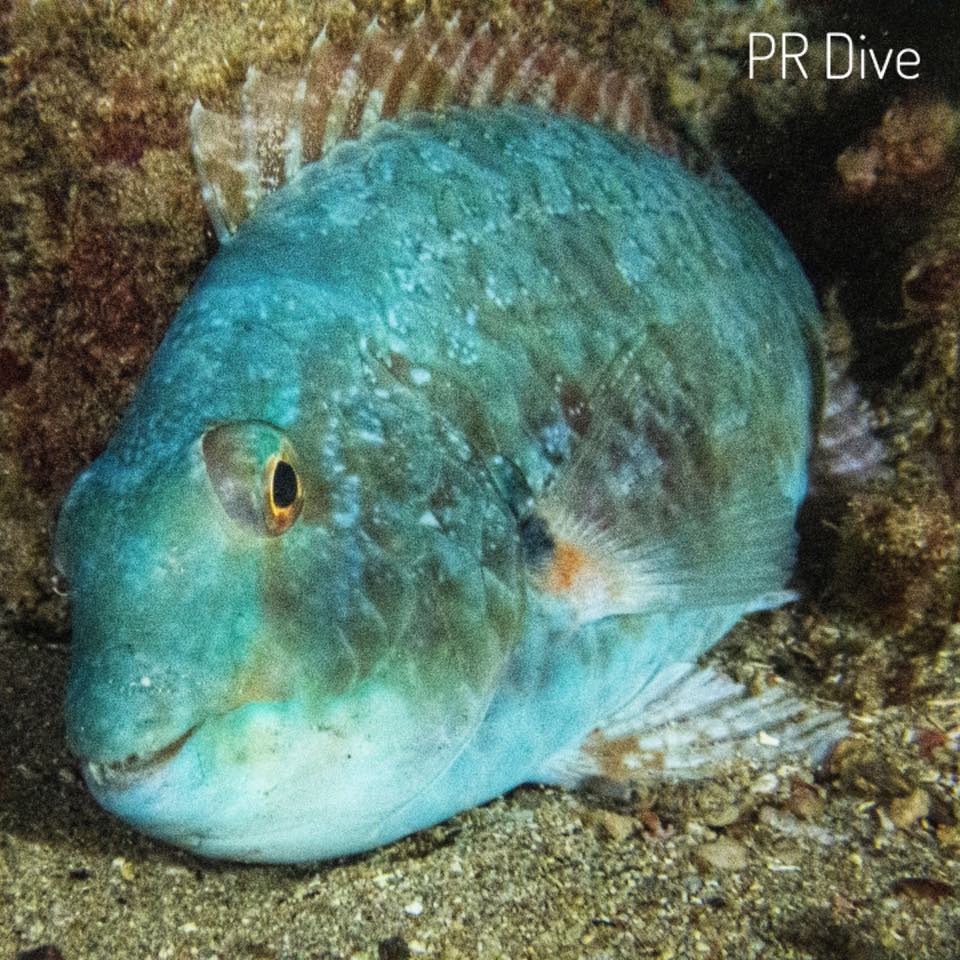
Pez loro · Scaridae
Scrapes algae off dead coral, and the ground-up rock comes out as sand. At night many sleep in a mucus “sleeping bag”.
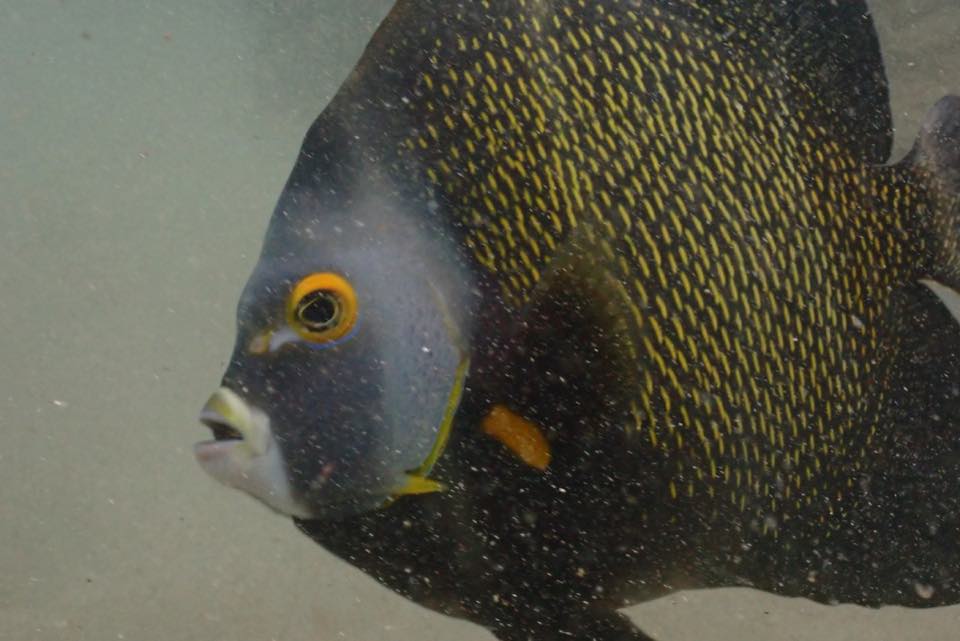
Pez ángel francés · Pomacanthus paru
Adults often swim in pairs. Juveniles are black with yellow bands and clean parasites off other fish.
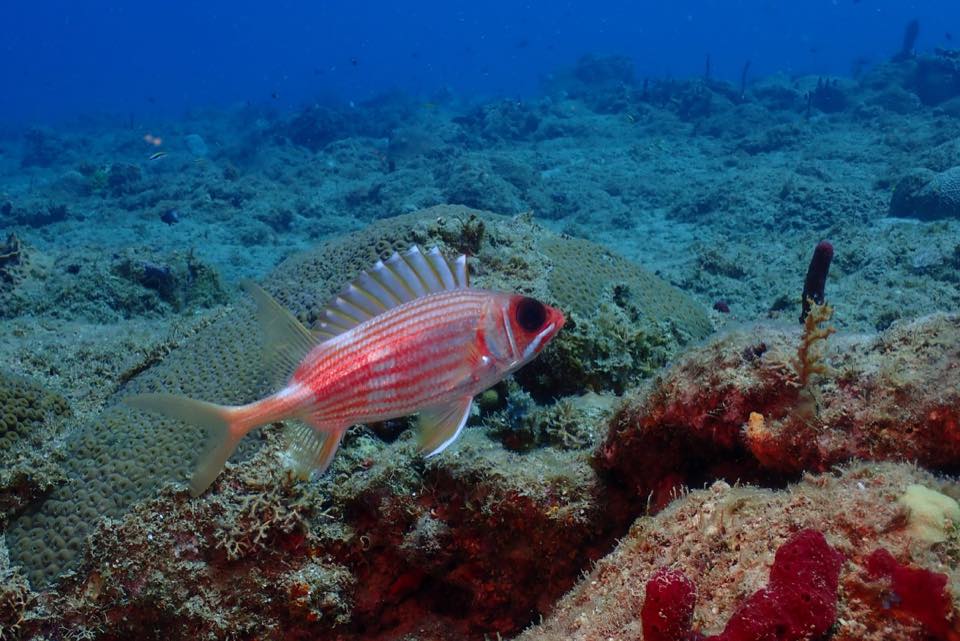
Candil · Holocentrus adscensionis
Big eyes and red color for hunting at night. By day it waits under ledges.
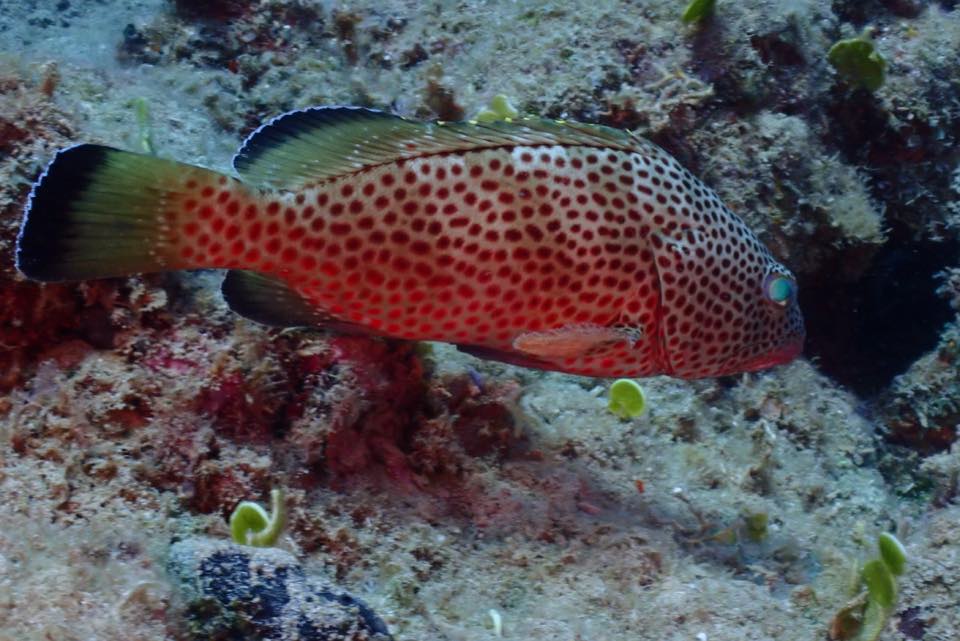
Cabrilla · Epinephelus guttatus
A small grouper covered in red spots. It rests on the bottom and waits for prey to come close.
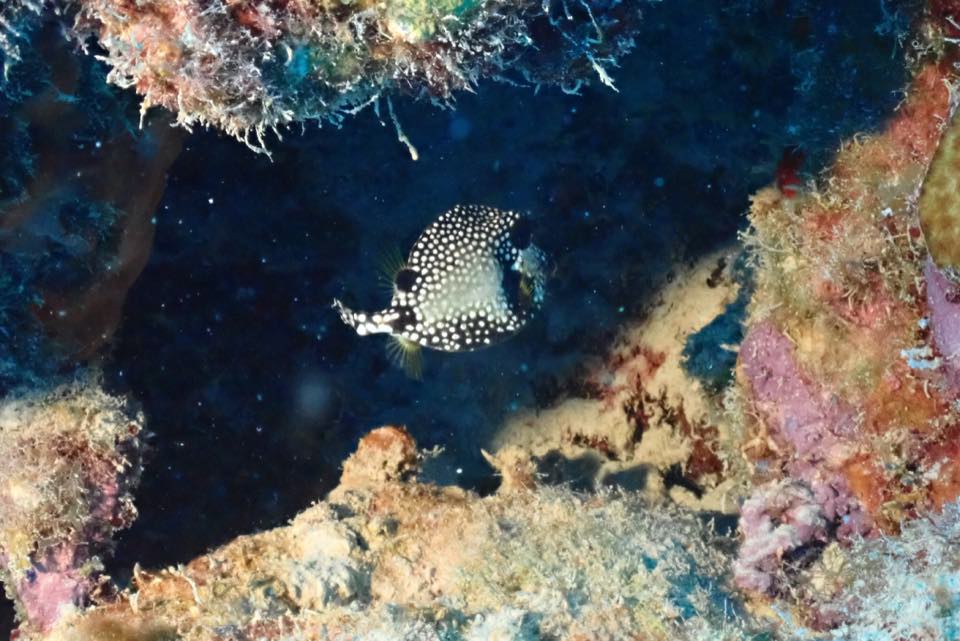
Chapín · Lactophrys bicaudalis
Its body is a hard, boxy shell covered in black spots. It swims slowly, sculling with its fins.
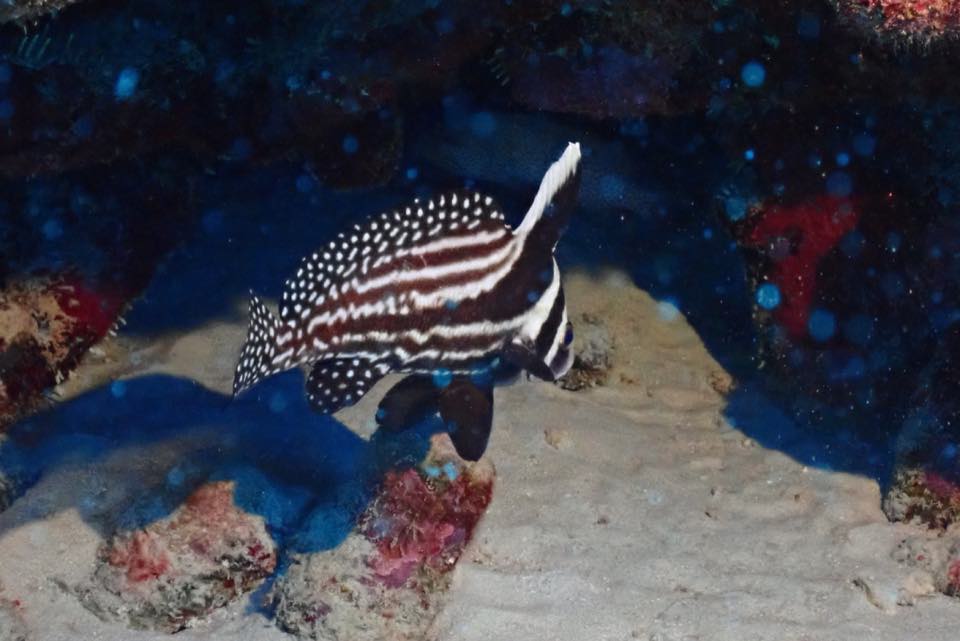
Payaso · Equetus punctatus
Long, flowing fins and black-and-white stripes. Shy, and usually found under ledges.
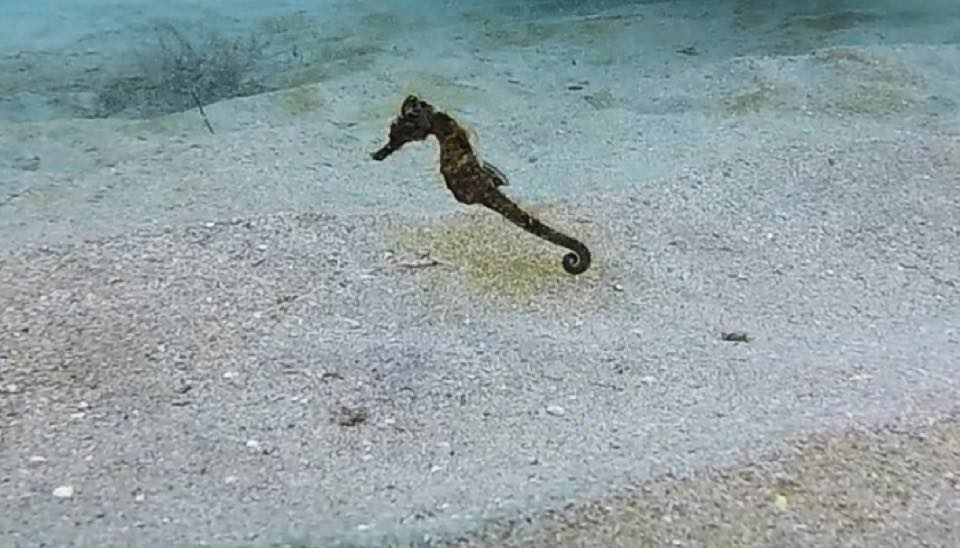
Caballito de mar · Hippocampus spp.
Small, slow and well camouflaged on sand, seagrass and structures. Move slowly, don’t touch, and keep your fins off the bottom.
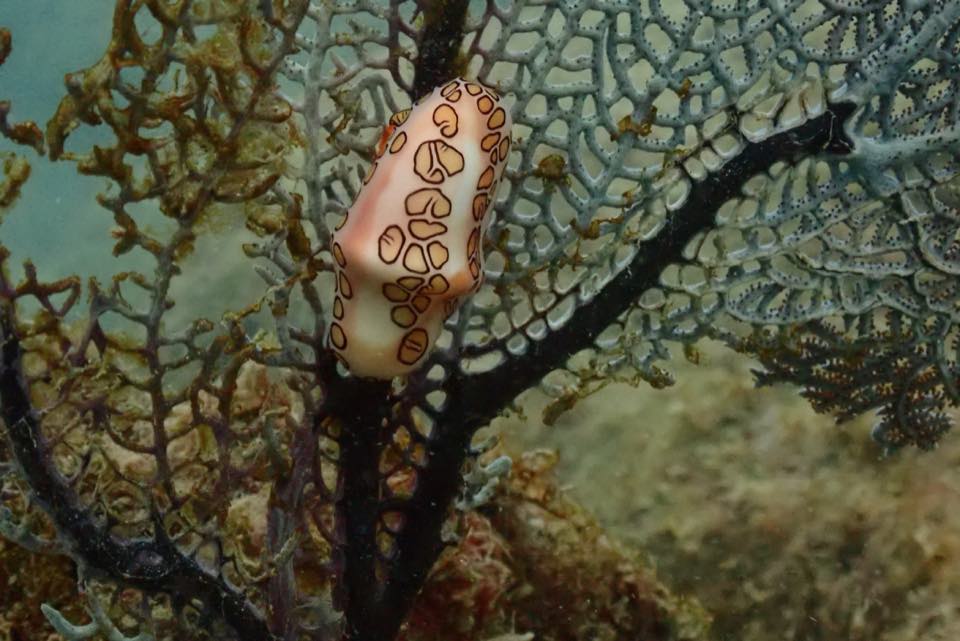
Lengua de flamenco · Cyphoma gibbosum
A small snail that lives on sea fans. The spotted pattern is its living skin. The empty shell is plain, so please don’t collect them.
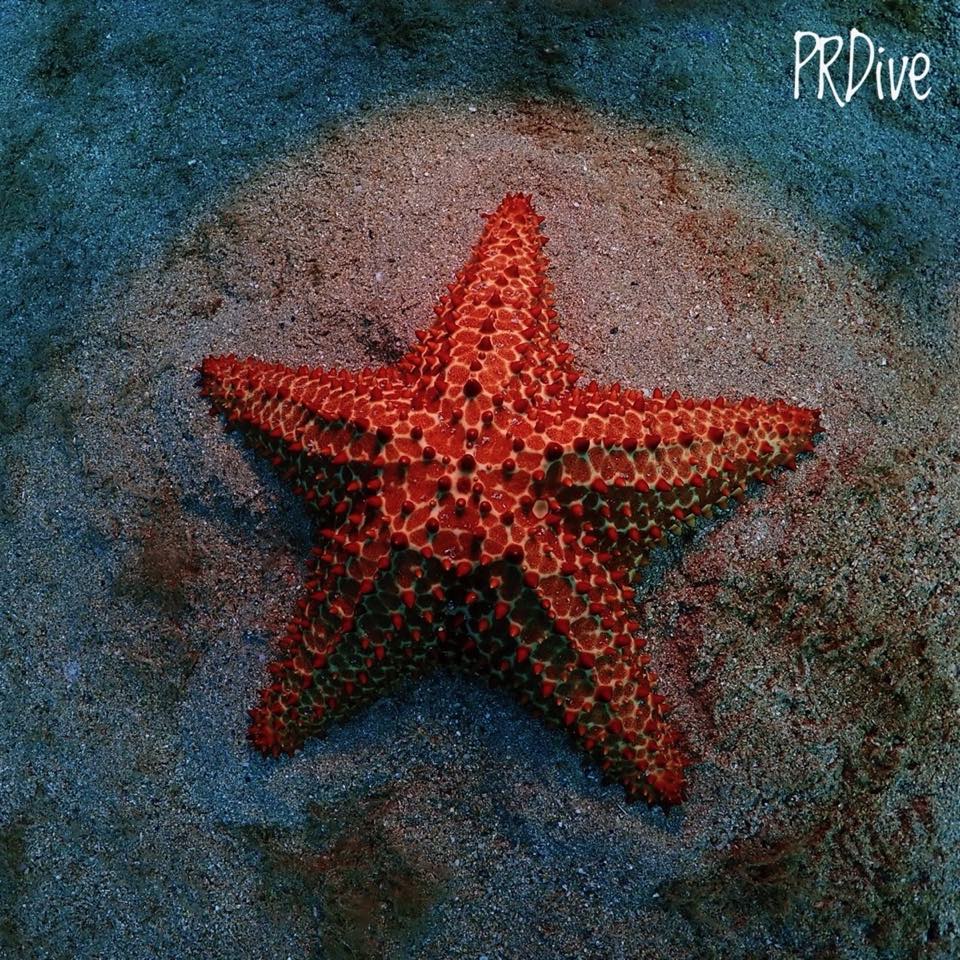
Estrella de mar cojín · Oreaster reticulatus
A big, thick sea star found on sand and seagrass. Never lift it out of the water.
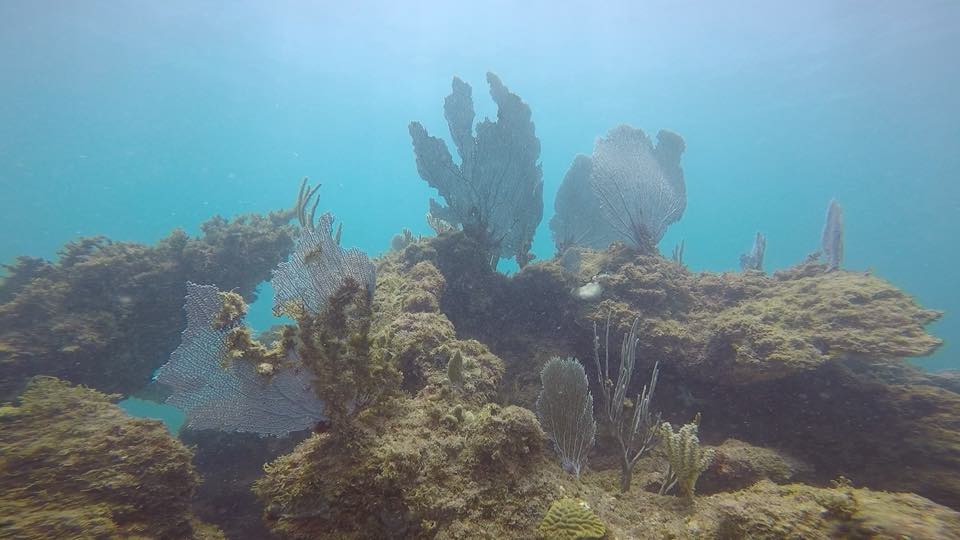
Abanico de mar · Gorgonia ventalina
A soft coral that grows across the current to filter food. Don’t touch or kick it.
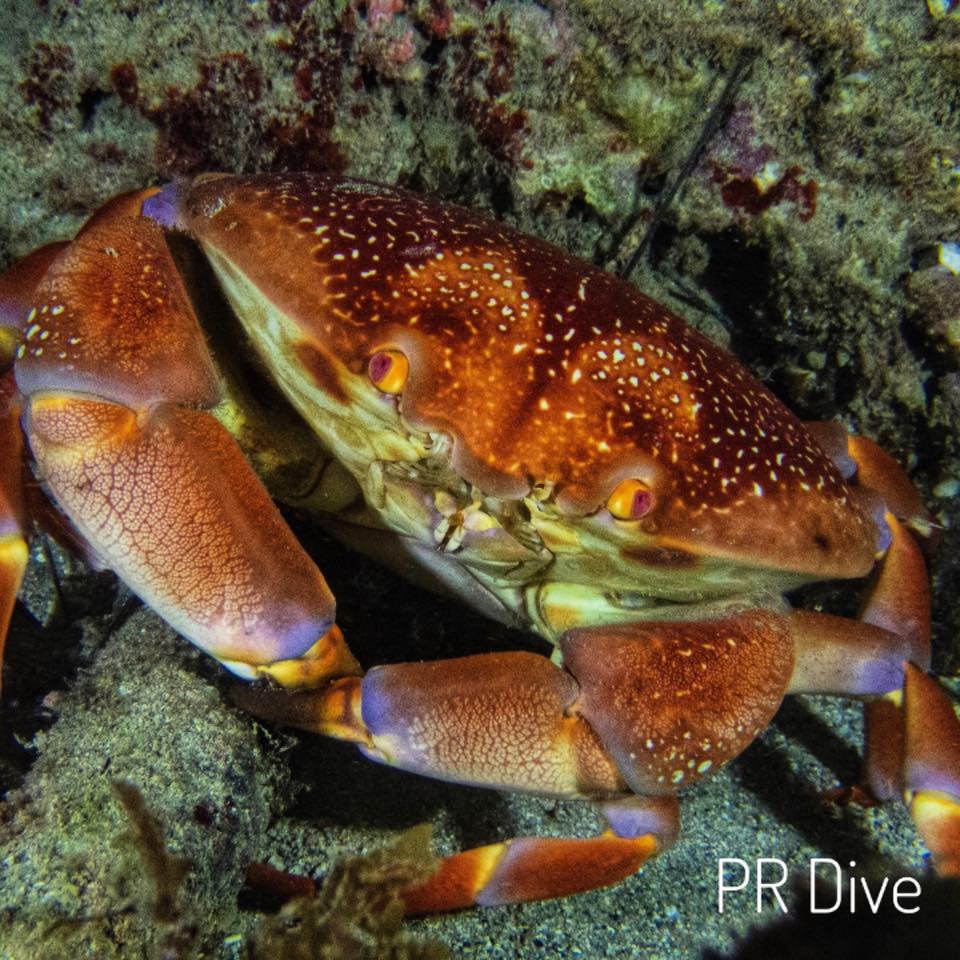
Cangrejo de coral · Carpilius corallinus
A big, heavy crab that comes out at night. Look, but keep your hands to yourself.
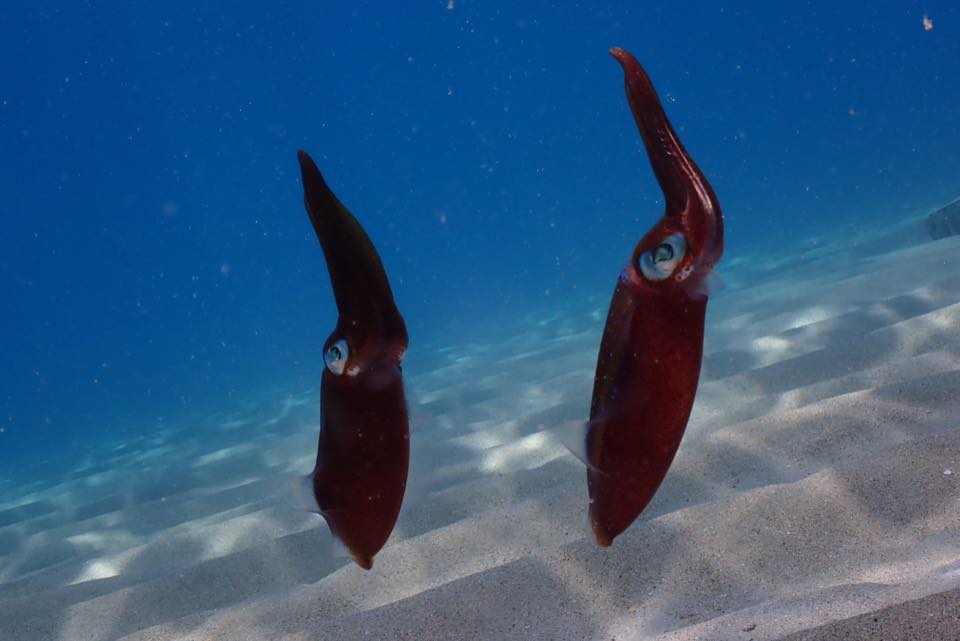
Calamar de arrecife · Sepioteuthis sepioidea
Travels in small groups and changes color in a blink. Hover still and they often come to look at you.
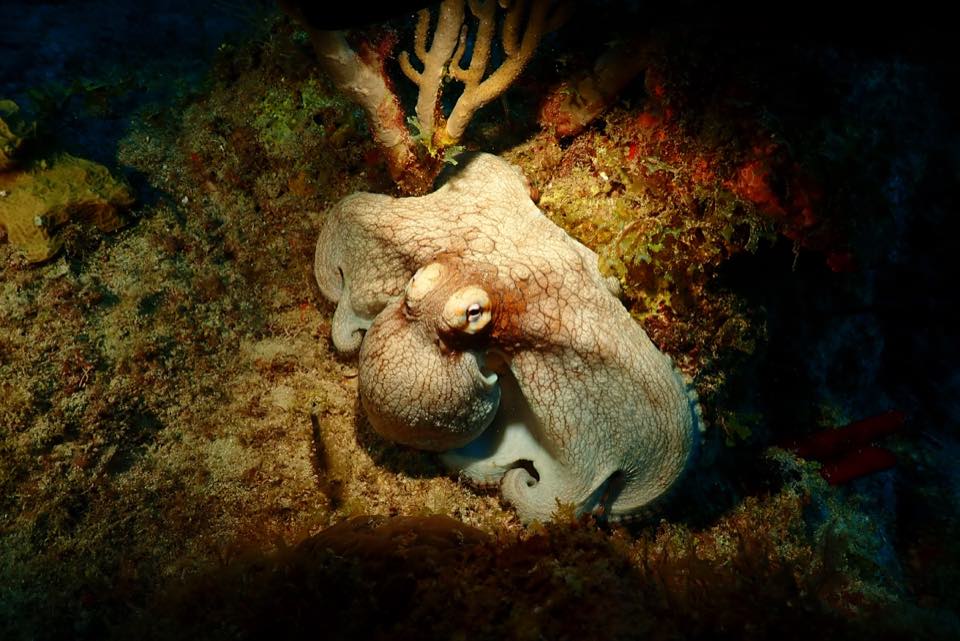
Pulpo · Octopus spp.
A master of disguise that changes color and texture. Look for piles of empty shells at the entrance to its den.
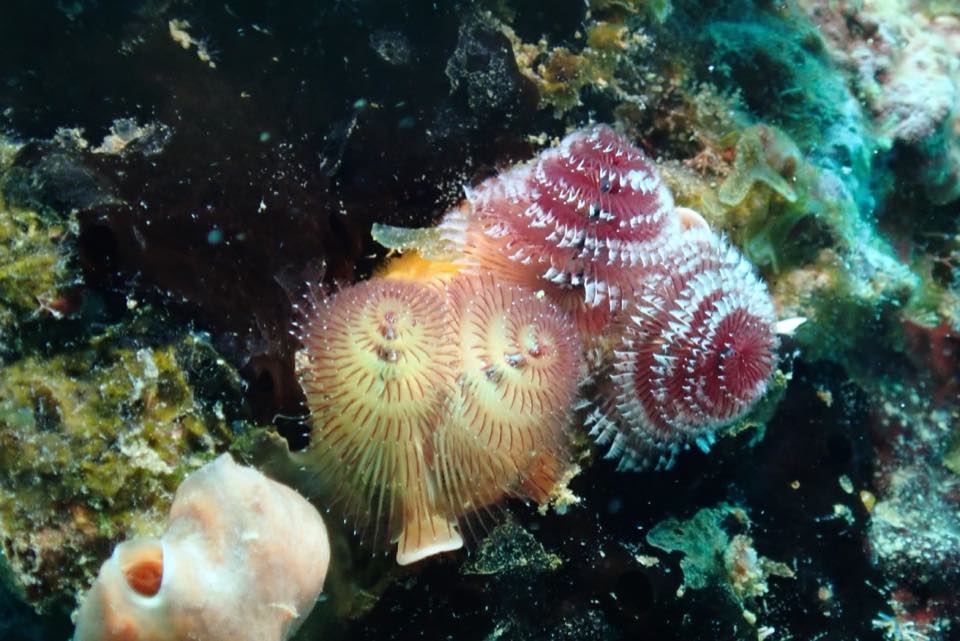
Gusano árbol de Navidad · Spirobranchus giganteus
Tiny, colorful spirals that live in coral. They vanish in a flash if you get too close.
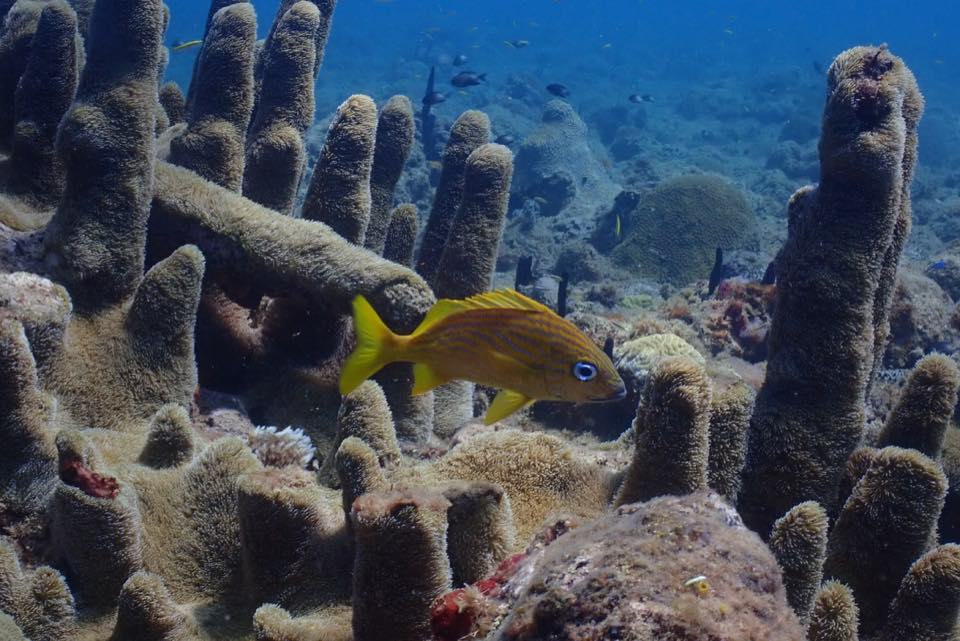
Protected
Coral pilar · Dendrogyra cylindrus
Grows in tall, fuzzy columns. It is listed as endangered under the U.S. Endangered Species Act.
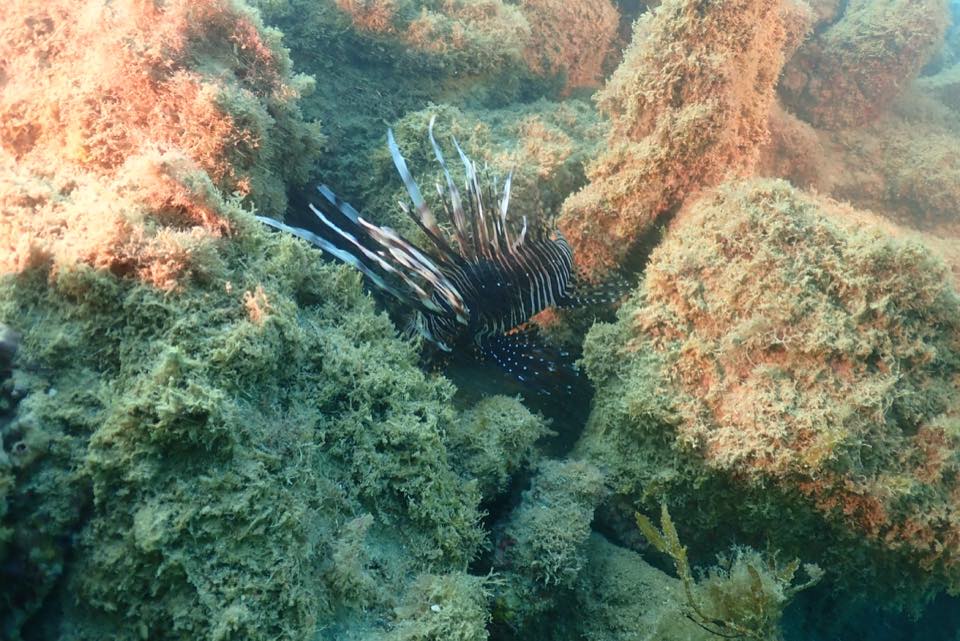
Lionfish are beautiful, venomous and invasive. They eat the young reef fish on this page. What divers should know about lionfish.
Sea turtles are protected under the U.S. Endangered Species Act. Report injured or stranded turtles to Puerto Rico’s Department of Natural and Environmental Resources (DRNA).