

Gear guides · Reef care
Lionfish: beautiful, venomous, invasive.
Lionfish don’t belong in the Caribbean. Here’s why they matter to every diver in Puerto Rico, and how to handle them safely.
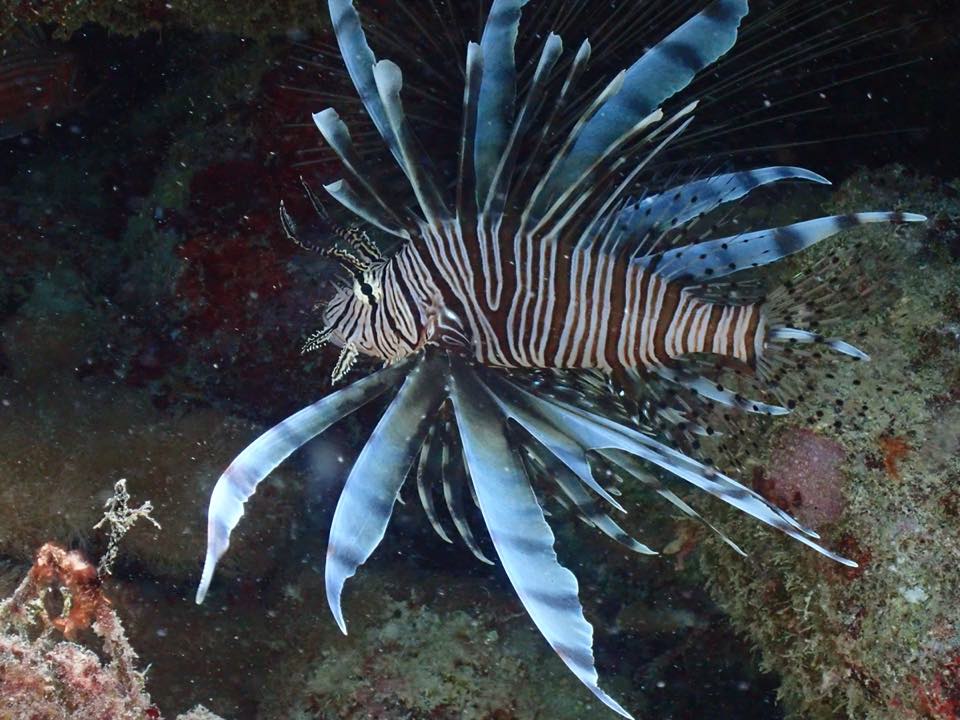
Why they’re a problem
- They’re not from here. Lionfish are native to the Indo-Pacific. They were first seen off Florida in 1985 and had spread across the Caribbean by the late 2000s.
- Few predators here eat them. Most Caribbean reef predators don’t recognize them as food.
- They eat everything small. Young snappers, grunts, parrotfish and shrimp: the animals that keep a reef healthy.
- They breed fast. A single female can release millions of eggs a year.
How to spot one
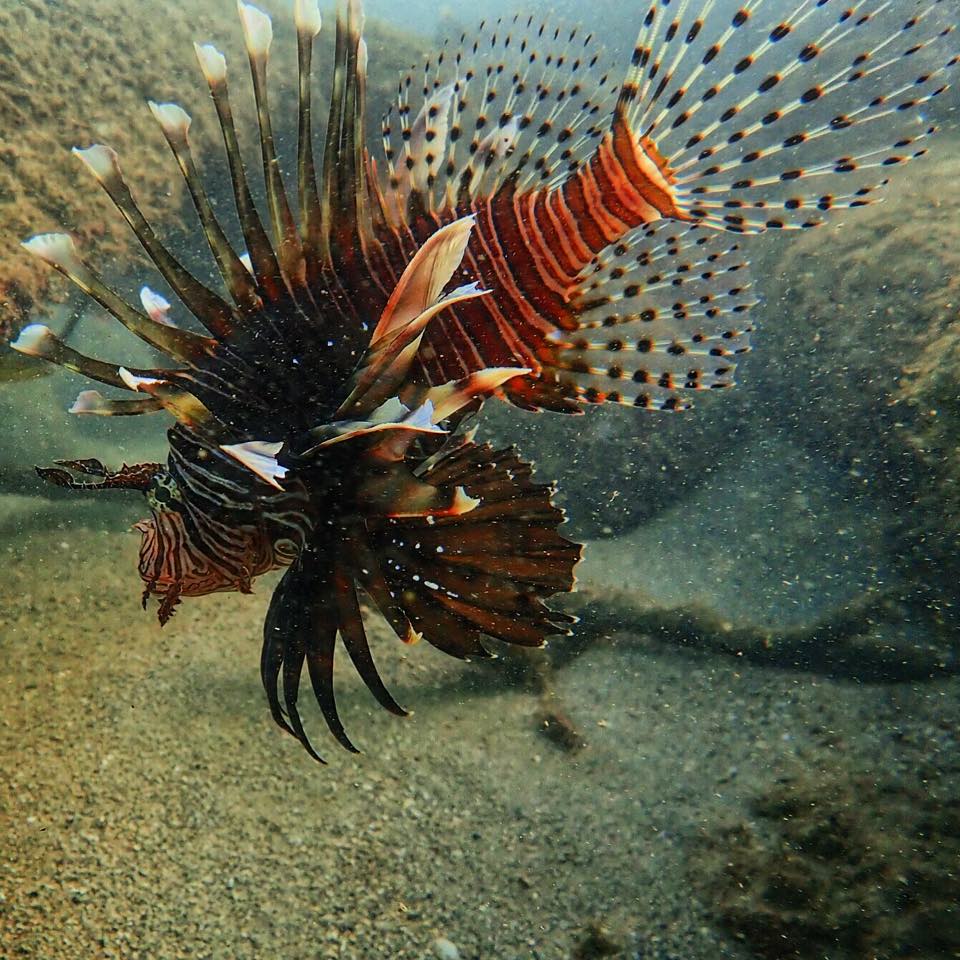
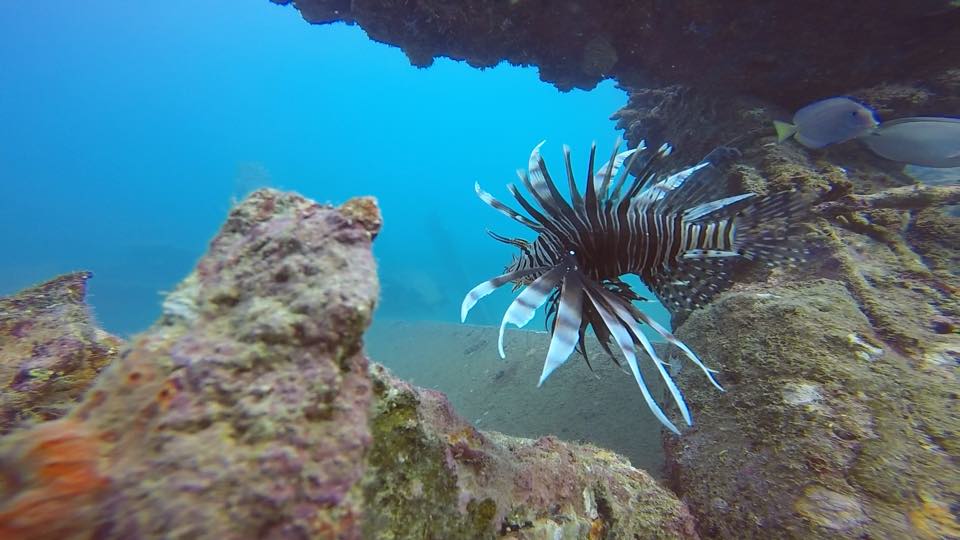
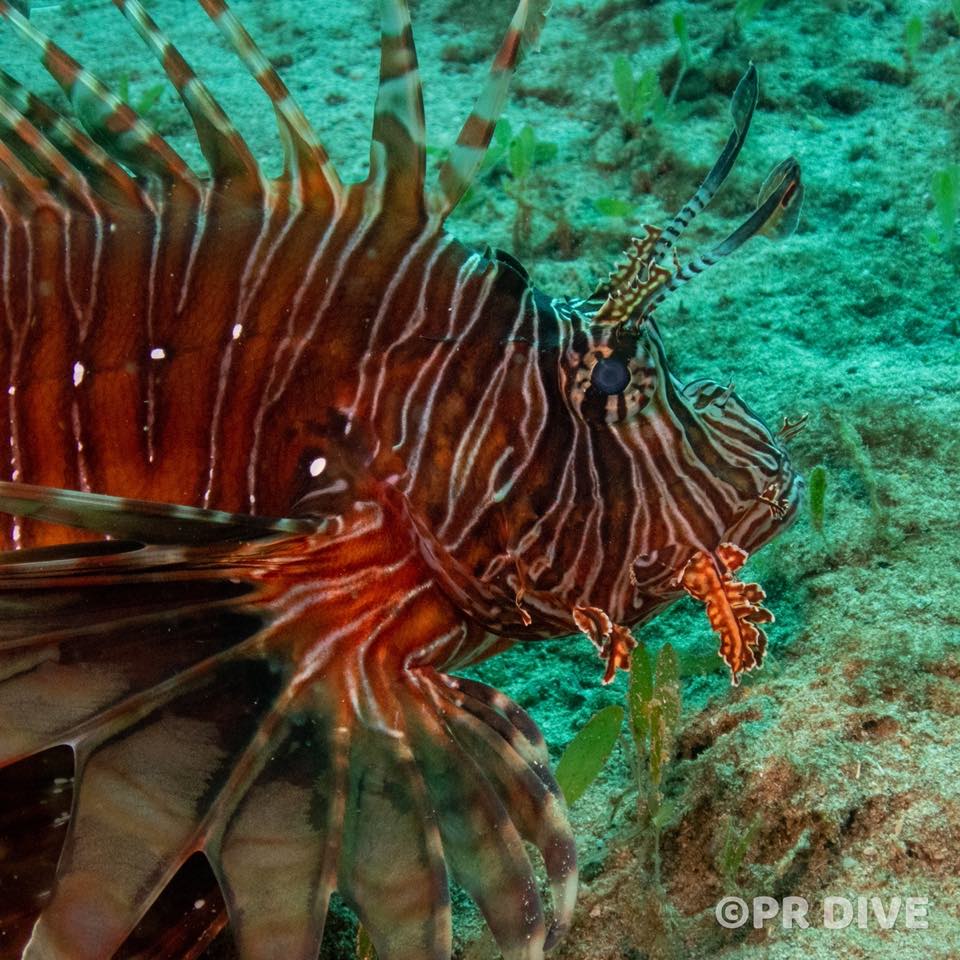
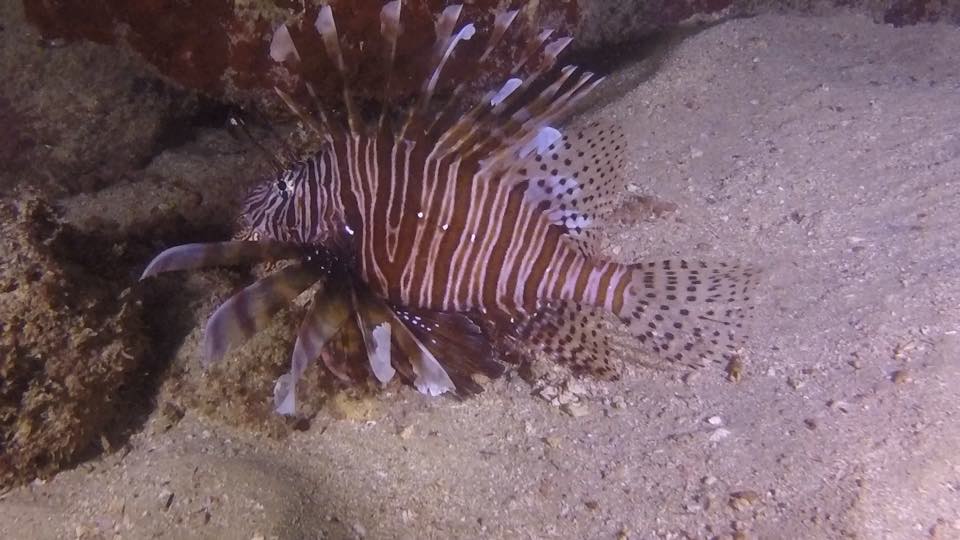
Red, brown and white stripes, long feathery fins and a row of tall spines along the back. They often hover still under ledges and in holes, and they don’t swim away from divers.
Don’t confuse them with the spotted scorpionfish, a native relative that hides flat against the reef. Both have venomous spines, so neither should be touched.
If you get stung
The spines along the back, sides and belly carry venom. A sting is very painful but rarely dangerous.
- Get out of the water safely and calmly.
- Remove any spine pieces carefully, with tweezers and gloves if you have them. Wash with soap and fresh water.
- Soak it in hot water, as hot as can be tolerated but no hotter than 113°F (45°C), for 30 to 90 minutes. Heat breaks down the venom. Test the water on your own skin first, because the pain makes it hard to judge.
- See a doctor if the pain doesn’t ease, the area swells or looks infected, or you feel faint, short of breath or unwell. Call 911 for anything serious.
Hunting them
Removing lionfish helps the reef, and many divers here help do it. But the rules matter:
- In Puerto Rico, recreational spearfishing while using scuba isn’t allowed. Hunting lionfish on scuba, or inside a reserve, needs a written special authorization from the DRNA. Ask us before you go.
- Use a pole spear or Hawaiian sling, a puncture-resistant glove and a containment tube so you never handle the fish by hand.
We carry spears and Zookeeper containment tubes at the shop. Spearfishing & freediving
Yes, you can eat them
The venom is only in the spines. As with other reef fish in the Caribbean, larger fish can carry ciguatera, so follow local advice on size and area. The meat is white, firm and mild, and good fried, in ceviche or on the grill. Cut the spines off carefully with scissors before cleaning the fish. The more people eat them, the more reason there is to remove them from the reef.
This page is general information, not medical or legal advice. Sources: NOAA, NOAA (ciguatera), DAN, DRNA.